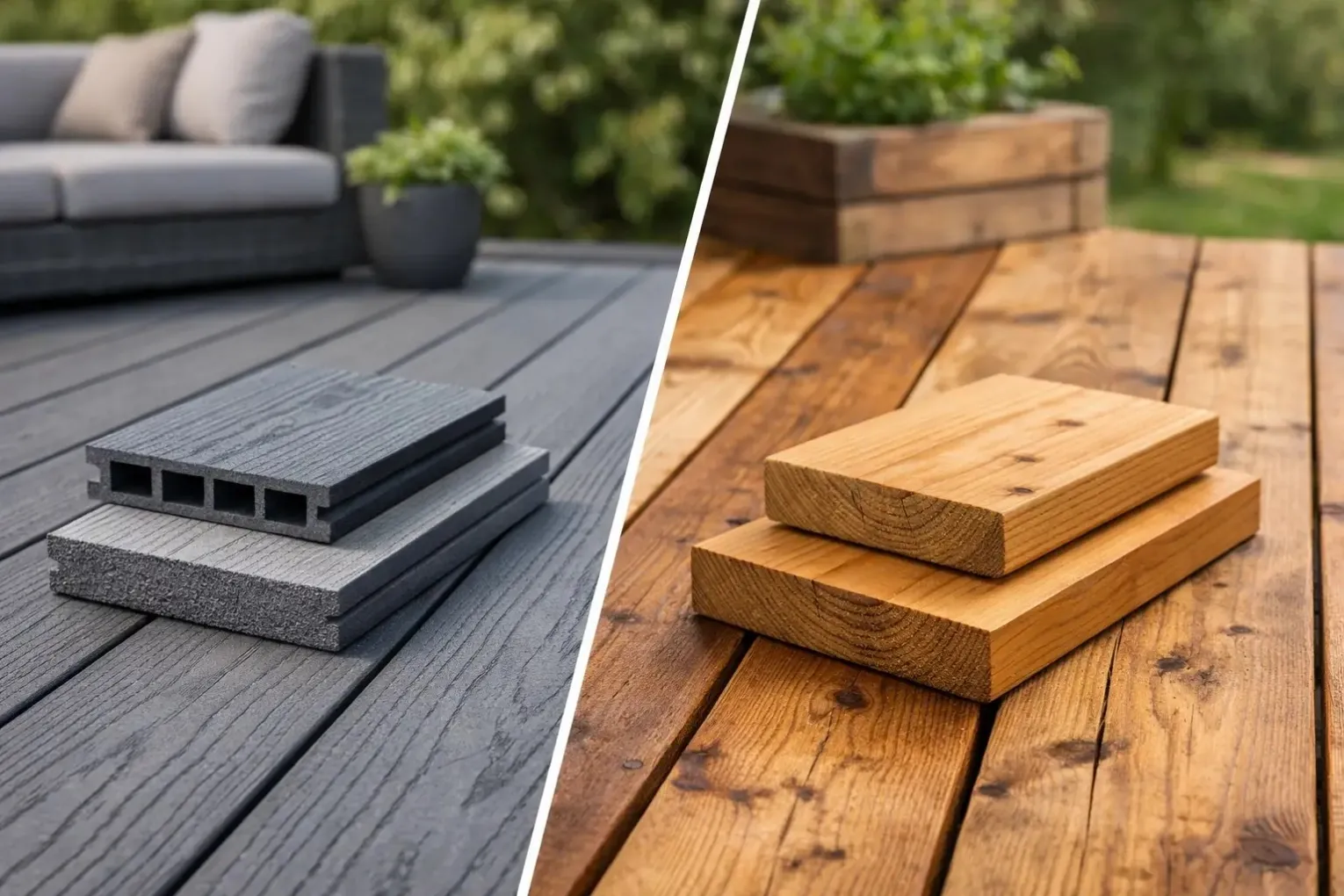
How to Choose a WPC Decking Profile
A buyer's guide to choosing a WPC decking profile: surface family, hollow or solid structure, size, color and application - with a pre-order checklist.
Choosing a WPC decking profile comes down to five decisions: the surface family, the structure (hollow or solid), the size, the color system and the installation method. Get those five aligned with your project and the specification writes itself. This guide walks through each decision with real profile examples from the MEISEN range.
Decision 1: Which Surface Family?
WPC decking falls into three surface families, each with a different character:
- Traditional WPC - the established, versatile line for general outdoor applications, with four wood grain embossing patterns and seven standard colors.
- 3D embossed WPC - a deep embossed wood texture pressed into the board surface (eight online embossing patterns), aimed at villas, patios and landscape decks where the texture is the feature.
- Co-extrusion WPC - a capped board with a protective polymer layer over the core, positioned for residential and commercial decking where a defined color system matters, with ten standard colors.
If the specification says "wood look, defined colors, commercial wear", start with co-extrusion. If it says "deep texture, villa landscape", look at 3D embossed. For general residential decking on a budget, traditional profiles do the job.
Decision 2: Hollow or Solid?
Both structures exist across the range:
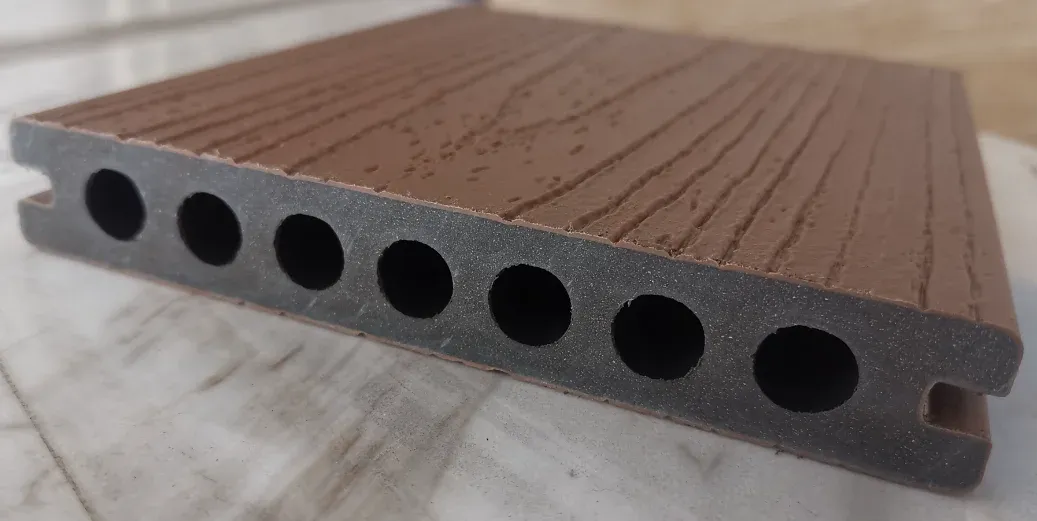
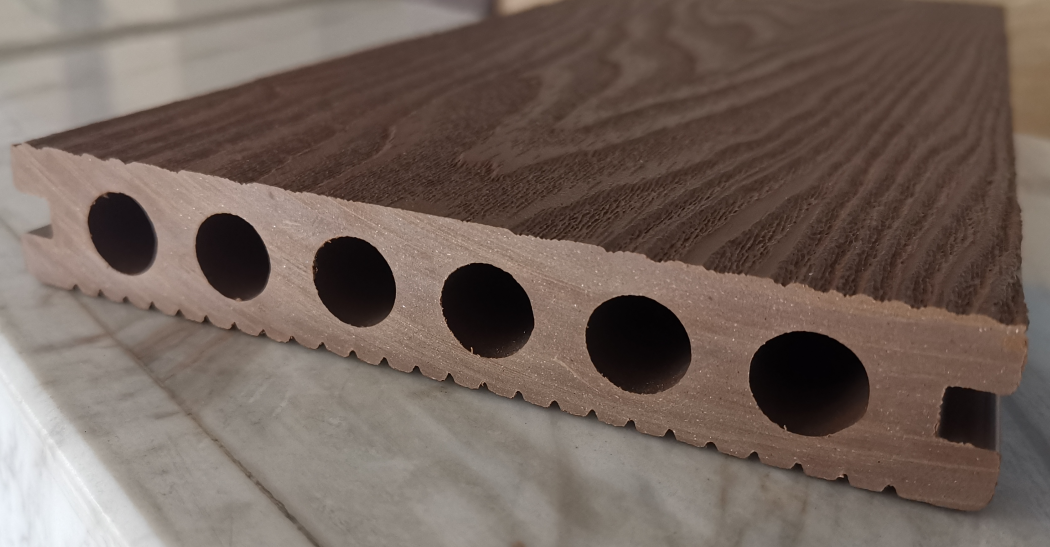
- Hollow profiles (for example MS140K25A at 140 x 25 mm, GJ145K24 at 145 x 24 mm) are the standard for decks fixed with hidden fasteners - lighter boards, clips on the joist substructure, no visible screws.
- Solid profiles (for example MS140S25A at 140 x 25 mm, GJ140S25 at 140 x 25 mm in co-extrusion) suit projects that prefer a solid section for their fixing approach.
There is no universally "better" structure - match it to the fixing system, span and project preference, and confirm the substructure design with your installer.
Decision 3: Size
Profile sizes follow a naming logic: for example, MS140K25A is a 140 x 25 mm hollow traditional board, GJ138K22 a 138 x 22 mm hollow co-extrusion board, Z140K23 a 140 x 23 mm hollow 3D embossed board. Widths across the MEISEN range run from 100 to 240 mm depending on the line.
Practical notes:
- Wider boards cover area with fewer lines; check the gap and clip plan with your installer.
- Always confirm the nominal size against the technical profile catalogue before ordering.
Decision 4: Color and Surface
Two color systems exist and they are independent:
- Traditional and 3D embossed lines share seven standard colors: Natural Wood, Copper Brown, Coffee, Cedar, Dark Coffee, Dark Grey and Black.
- Co-extrusion line has its own ten-color system: B-001 Charcoal through B-006 Silver Grey, plus Y-001 Sky Blue to Y-004 Redwood.
Custom colors are available on request in both systems. Always review physical samples in project lighting before committing to large areas - colors shown in catalogs and screens are for reference.
Decision 5: Application
Match the family to the application as the catalog suggests:
- Co-extrusion decking - residential and commercial decking
- 3D embossed decking - villas, patios and landscape decks
- Traditional WPC decking - general residential outdoor decking
- Cladding - facade and outdoor wall decoration
- Fencing - garden and landscape enclosures
- DIY decking tiles - balconies, patios and small upgrades
The Buyer's Confirmation Checklist
Before placing an order, confirm with your supplier:
- Application and project environment
- Profile family (traditional / 3D embossed / co-extrusion)
- Profile size and structure (hollow or solid)
- Surface preference and color code
- Estimated quantity
- Installation method and accessories (clips, joists, starting clips)
- Destination market requirements
- Documentation available for the profile
A Note on Model Numbers
MEISEN model numbers encode the nominal dimensions - MS140K25A (140 x 25 mm), Z140K23 (140 x 23 mm), GJ145K24 (145 x 24 mm) - which makes first-round selection faster. Treat the numbers as a shortlist tool, then confirm every dimension in the technical profile catalogue.
FAQ
Which is better: co-extrusion, 3D embossed or traditional WPC? Depends on the project. Co-extrusion brings a capped surface and its own color system; 3D embossed brings deep texture; traditional is the versatile general line. Compare against the application, not the label.
Can I mix profile families in one project? Technically yes, but the traditional/3D color system and the co-extrusion color system are independent - check color matching on samples before combining.
Do hollow boards feel different underfoot? Hollow profiles are the standard for hidden-fixer decks; span and joist spacing affect feel more than the hollow structure itself. Confirm joist design with your installer.
What accessories come with the boards? MEISEN offers fixing clips, starting clips and joists (for example MS50K30); the accessories list and supply scope are confirmed with your quotation.
Request a Profile Shortlist
Send MEISEN your application, target market and estimated quantity, and we will shortlist profiles, colors and accessories for your project.